


Quick facts
- Size
- Commonly 11.5 to 16 ft (3.5 to 5 m); up to about 20 ft (6 m)
- Range
- Cool and warm temperate coasts worldwide; crosses open oceans
- Habitat
- Coasts, offshore islands and open ocean; dives to about 1,000 m (3,300 ft)
- Diet
- Fishes and rays when young; seals, sea lions, dolphins and whale carcasses as adults
- Young
- Live birth; 2 to 10 or more pups
- Red List class
- Vulnerable
- Order
- Mackerel sharks (Lamniformes)
- Family
- Lamnidae
- Scientific name
- Carcharodon carcharias
About the great white shark
The heaviest fish that hunts big prey, and the best-known shark. Warm muscles, a warm brain and good eyesight suit it to hunting fast, alert prey in cool water. It often strikes seals from below at speed, sometimes leaving the water completely. Tracking shows that great white sharks are ocean travelers that return to the same feeding sites year after year. Mating and birth have never been witnessed.
The great white shark belongs to the mackerel sharks, one of the nine living orders of sharks. All About Sharks tells the story of sharks as a whole and names the 39 that have a page here.
More about the great white shark
A computer model of a great white shark’s skull and jaw muscles, published in 2008, estimated that a 21 ft (6.4 m) animal could bite with a force of about 18,000 newtons, roughly the weight of a family car resting on its back teeth.
The great white shark, the two makos, the porbeagle, the salmon shark and at least one thresher keep parts of their bodies well above water temperature.
The stomach of a great white shark has been measured at about 14 °C (25 °F) above the surrounding water, and the salmon shark of the North Pacific keeps its core near 25 °C (77 °F) in seas only a few degrees above freezing.
Ground sharks, including tigers and bulls, have a tough third eyelid that slides up from below. Great white sharks lack it and roll their eyes backward into the socket instead.
Great white sharks tagged off central California leave the coast each winter and swim to an area of open ocean halfway to Hawaii, nicknamed the White Shark Café, where they dive repeatedly for reasons that are still debated.
Great white sharks hunting seals often rely on a single massive first strike from below and behind, sometimes carrying both animals clear of the water.
One explanation is mistaken identity. Seen from below against the bright surface, a surfer on a board has much the same outline as a seal, and a study published in 2021, which modeled what a young great white shark’s eyes can resolve, found that the shark probably could not tell them apart.
A great white shark’s exploratory bite is enough to cause terrible injury.
Young great white sharks have appeared in bays north of their former range off California, and bull sharks are using estuaries farther from the tropics.
Great white sharks off the east coast of the United States, protected since 1997, have been increasing again.
Great White Shark Facts


More mackerel sharks
 Shortfin makoIsurus oxyrinchusEndangered
 PorbeagleLamna nasusVulnerable
 Salmon sharkLamna ditropisLeast Concern
 Basking sharkCetorhinus maximusEndangered
 Pelagic thresherAlopias pelagicusEndangered
 Sand tiger sharkCarcharias taurusCritically Endangered
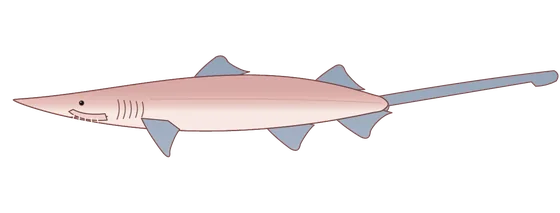 Goblin sharkMitsukurina owstoniLeast Concern
 Megamouth sharkMegachasma pelagiosLeast Concern
PreviousZebra sharkAll About SharksAll 39 speciesNextShortfin mako
Great White Shark Pictures
Real-Life Pictures and Realistic Watercolor Images
8 Pictures


FAQs about the Great White Shark
6 Questions
How big is the great white shark?
Commonly 11.5 to 16 ft (3.5 to 5 m); up to about 20 ft (6 m).
Where does the great white shark live?
Cool and warm temperate coasts worldwide; crosses open oceans. Habitat: coasts, offshore islands and open ocean; dives to about 1,000 m (3,300 ft).
What does the great white shark eat?
Fishes and rays when young; seals, sea lions, dolphins and whale carcasses as adults.
How does the great white shark reproduce?
Live birth; 2 to 10 or more pups.
Is the great white shark threatened with extinction?
Yes. The great white shark is classed as Vulnerable on the IUCN Red List, which means a high risk of extinction in the wild. Regional populations may differ, and classes are revised from time to time.
What kind of shark is the great white shark?
The great white shark (Carcharodon carcharias) belongs to the family Lamnidae in the order Lamniformes, the mackerel sharks. That is one of the nine living orders of sharks.
General Knowledge
GK4 Yearbook India GK for all competitive exams
World Encyclopedia
GK4 Encyclopedia World GK

We Value Your Opinion Comments