

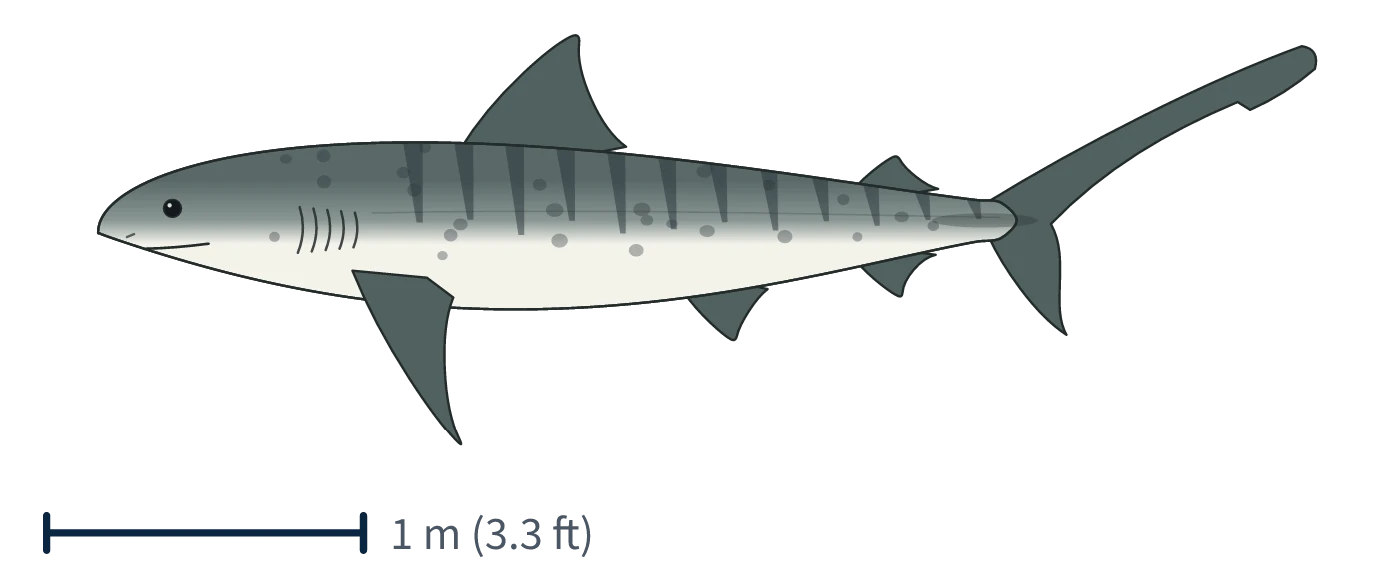
Quick facts
- Size
- Commonly 10 to 15 ft (3 to 4.5 m); up to about 18 ft (5.5 m)
- Range
- Tropical and warm temperate seas worldwide
- Habitat
- Coasts, reefs, lagoons and harbors, and across open ocean
- Diet
- Fishes, sea turtles, seabirds, sea snakes, rays, dolphins and carrion
- Young
- Live birth; 10 to 80 pups
- Red List class
- Near Threatened
- Order
- Ground sharks (Carcharhiniformes)
- Family
- Galeocerdonidae
- Scientific name
- Galeocerdo cuvier
About the tiger shark
The least fussy eater among sharks. Broad jaws and curved, saw-edged teeth cut through turtle shell, and stomachs have also held license plates, tins and other trash. The dark bars that give it its name fade with age. In Shark Bay, Western Australia, the mere presence of tiger sharks changes where turtles and dugongs graze. It is second only to the great white shark in recorded bites on people.
The tiger shark belongs to the ground sharks, one of the nine living orders of sharks. All About Sharks tells the story of sharks as a whole and names the 39 that have a page here.
More about the tiger shark
Most sharks are opportunists that take whatever is abundant and easy. The tiger shark is the extreme case. A few are specialists.
The license plates and tins sometimes found in tiger sharks make the news because they are unusual. They say little about the everyday diet.
The top of that food web belongs to tiger sharks, hammerheads and people.
Three species account for most serious bites: the great white shark, the tiger shark and the bull shark. The International Shark Attack File has linked great white sharks to more than 350 unprovoked bites over its whole history, tiger sharks to more than 140 and bull sharks to about 120.
Tiger Shark Facts
More ground sharks
 Bull sharkCarcharhinus leucasVulnerable
 Speartooth sharkGlyphis glyphisVulnerable
 Blue sharkPrionace glaucaNear Threatened
 Oceanic whitetip sharkCarcharhinus longimanusCritically Endangered
 Great hammerheadSphyrna mokarranCritically Endangered
 Scalloped hammerheadSphyrna lewiniCritically Endangered
 BonnetheadSphyrna tiburoEndangered
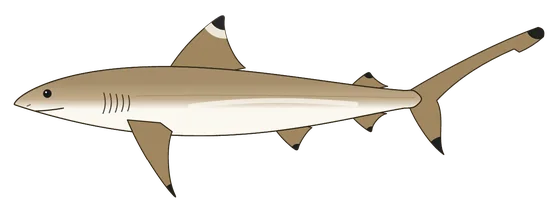 Blacktip reef sharkCarcharhinus melanopterusVulnerable
PreviousMegalodonAll About SharksAll 39 speciesNextBull shark
Tiger Shark Pictures
Real-Life Pictures and Realistic Watercolor Images
4 Pictures


FAQs about the Tiger Shark
6 Questions
How big is the tiger shark?
Commonly 10 to 15 ft (3 to 4.5 m); up to about 18 ft (5.5 m).
Where does the tiger shark live?
Tropical and warm temperate seas worldwide. Habitat: coasts, reefs, lagoons and harbors, and across open ocean.
What does the tiger shark eat?
Fishes, sea turtles, seabirds, sea snakes, rays, dolphins and carrion.
How does the tiger shark reproduce?
Live birth; 10 to 80 pups.
Is the tiger shark threatened with extinction?
No. The tiger shark is classed as Near Threatened on the IUCN Red List, which means it is close to qualifying as threatened. Regional populations may differ, and classes are revised from time to time.
What kind of shark is the tiger shark?
The tiger shark (Galeocerdo cuvier) belongs to the family Galeocerdonidae in the order Carcharhiniformes, the ground sharks. That is one of the nine living orders of sharks.
General Knowledge
GK4 Yearbook India GK for all competitive exams
World Encyclopedia
GK4 Encyclopedia World GK

We Value Your Opinion Comments